when deploying services in the asia-pacific market or targeting korean users, it is crucial to choose a local service provider to provide vps with korean organic rooms. this article has compiled a systematic assessment checklist for you to help strike a balance between latency, reliability and compliance, ensuring that deployment and subsequent operation and maintenance meet business needs and local user experience.
network connectivity and latency (latency)
when evaluating network connectivity, focus on the round-trip time (rtt), packet loss rate, and path stability from the target user group to the korean computer room. the service provider is required to provide test data in different time periods, directly connected backbone or local switching node information, and verify whether it supports bgp multi-line or cdn acceleration to reduce latency and improve access stability.
computer room qualifications, power supply and cooling
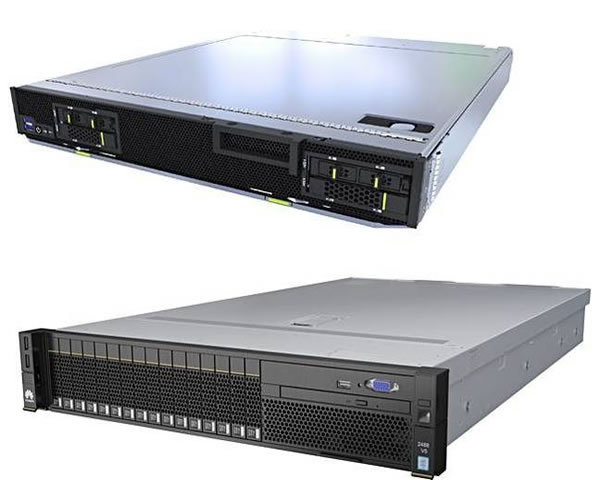
confirm whether the computer room is a real organic computer room (local physical computer room), check its tier level or equivalent indicators, power redundancy and ups/power generation backup solutions, as well as cooling system and temperature control strategy. understand the disaster recovery capabilities and physical security measures of the computer room to ensure stable hardware operation, transparent maintenance windows, and predictable failure recovery.
bandwidth, traffic billing and backbone interconnection
bandwidth type and traffic billing policy directly affect long-term costs and performance. evaluate the peak upstream/downstream bandwidth, whether to charge by peak, whether there is a traffic cap or tiered pricing based on traffic. inquire about the interconnection status with local isps and international backbone networks to determine cross-border access performance and peak support capabilities.
security measures and compliance requirements
confirm the service provider's security measures at the physical and network layers: anti-ddos capabilities, intrusion detection, vpc and firewall management mechanisms. in addition, check whether data storage, backup and processing comply with local korean regulations and privacy protection requirements to ensure compliant storage and traceability of user data.
technical support, localization and response speed
the localization service provider's supported languages, working hours, and response sla determine operation and maintenance efficiency. give priority to suppliers that can provide korean language support, local business understanding and quick response mechanisms. clarify the fault response time, upgrade process and change notification frequency, and verify whether local engineers are available for on-site support.
backups, snapshots and scalability
check the vps's backup strategy, snapshot frequency and recovery time objective (rto/rpo), and whether it supports elastic expansion and horizontal scaling. confirm whether it is easy to migrate from the test environment to production, and whether it supports automated deployment and api management to facilitate subsequent expansion of resources on demand.
conclusion and recommendations
when choosing a local service provider to provide a vps with a korean computer room, give priority to evaluating network quality, computer room credibility, billing model, security compliance and local support capabilities. by measuring delays, reviewing qualification documents, and clarifying sla terms, operational risks can be effectively reduced and user experience improved. it is recommended to conduct a trial or short-term poc to verify key indicators and localized service quality before making a decision.
- Latest articles
- Cultural Differences: Common Etiquette And Communication Techniques Chinese People Use Korean Servers
- How To Take A Good Group Photo Of A Korean Boy Band Standing In A Row On The Red Carpet
- Enterprise-level Analysis Of How Taiwan Server Accelerators Enhance Cross-border Access Experiences
- Buying Cloud Servers In Thailand: How To Quickly Deploy Your Business Using Images And Templates
- Steps And Common Problem Solutions For Deploying A Native IP Server In Vietnam From Scratch
- Does High VPS Latency In Telecom Korea Affect SEO And User Retention? Data Evaluation Methods
- Taiwan Telecom CN2 Broadband Performance In Remote Work And Video Conferencing Tests
- Industry Case: Differences In The Performance Of Cloud Servers In Hong Kong And Singapore In The Financial And Gaming Industries
- How To Choose A Vietnam Cloud Hosting VPS Rental - A Guide To Comparing Merchants And Bandwidth Nodes
- Interpretation Of Alibaba Cloud Singapore's CN2 Access Advantages And International Network Layout Recommendations
- Popular tags
-

Yitan Cloud Korean Server Provides An Efficient And Stable Network Experience
yitan cloud korean server provides users with an efficient and stable network experience, suitable for various needs of corporate and individual users. -

Several Key Factors To Note When Choosing A Korean Vps
there are several key elements to pay attention to when choosing a korean vps to help users make informed decisions when choosing a virtual private server. -
Comparison Of The Advantages Of Korean Cn2vps And How To Choose The Most Suitable One
this article compares the advantages of south korea's cn2vps in detail to help you choose the most suitable vps service.